

David Gilroy is the managing director of Store Excel
In March this year, at the age of 15 years and 73 days, Max Dowman scored his first goal for Arsenal against Everton. He is the youngest ever player to score a goal at Premier League level. Indian cricketer Sachin Tendulkar is one of the most consequential young international debutants. From the age of 16 years and 205 days, the ‘Little Master’ went on to have a glittering 24-year career breaking many records, including the most ever international runs scored and the only player to score a century of centuries. When Max Dowman scored his goal at Arsenal, the crowd knew that they were witnessing something special. There is nothing more exciting than seeing young talent come through and succeed at senior level.
Supporters in all sports understand the importance of bringing youth through and the absolute need for an effective pipeline of future first-team players. In music, the youth principle is perhaps even more predominant where often the artist’s best and most enduring work is written and performed before or in their early 20s. Ed Sheeran broke through in 2011 just shy of his 20th birthday.
The importance of young people
Young talent is incredibly important for any enterprise. This is widely recognised by industry in schemes such as the RN 30 Under Thirty list, The Sunday Times Power List and the Federation of Wholesale Distributors Future Leaders Forum. Attracting and recruiting young people has become a strategic priority for modern organisations operating in fast-changing markets. As demographic shifts, technological advancement and evolving labour dynamics reshape the nature of work, businesses increasingly recognise the importance of young employees. Particularly those from Generation Z (Gen Z) and younger Millennials.
Not merely an entry-level workforce, but a critical source of innovation, adaptability and long-term sustainability. Youth unemployment and underemployment remain persistent in the UK. By recruiting young people, firms not only secure talent, but also contribute to broader economic stability. From an organisational behaviour perspective, diversity of thought is a key driver of innovation. Younger employees, having grown up in different social, technological and cultural environments, often challenge established practices and introduce novel approaches. This aligns with innovation theory, which emphasises the importance of cognitive diversity in generating new ideas.
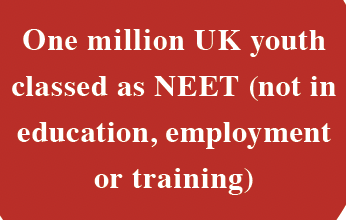
Young people are often described as ‘digital natives’, having grown up with advanced technologies and digital platforms. As a result, they bring valuable technological skills that are increasingly essential in modern workplaces.
Research indicates that younger employees possess up-to-date knowledge and familiarity with contemporary tools and systems, which can improve organisational efficiency and innovation. In an era defined by digital transformation, businesses benefit from employees who can quickly adapt to new technologies, from artificial intelligence systems to social media marketing platforms.
Recruiting young people is a long-term investment in human capital. Human capital theory suggests that organisations benefit from developing employees over time, increasing their productivity and organisational value. Young employees, often at the beginning of their careers, offer significant potential for development. Because they are still forming their professional identities, young recruits are more adaptable and easier to train in company-specific practices.
As noted in industry research, they represent a ‘blank slate’, allowing organisations to shape their skills and align them with organisational culture and strategic objectives. This approach supports succession planning. By hiring and developing young talent early, businesses can cultivate future leaders and reduce reliance on external recruitment for senior roles. It also enhances employee retention, as individuals who grow within an organisation are more likely to remain loyal.
Young employees can have a positive impact on organisational culture. Their enthusiasm, energy and optimism can enhance team dynamics and workplace morale. Evidence suggests their infectious enthusiasm contributes to improved productivity and collaboration.
Moreover, younger generations often prioritise values such as diversity, inclusion and social responsibility. Their presence can encourage organisations to adopt more inclusive practices that align with broader societal expectations.
This, in turn, strengthens employer positioning and helps attract additional talent. From a financial perspective, recruiting young employees can offer cost advantages. Entry-level workers typically command lower salaries than experienced professionals, allowing organisations to allocate resources more efficiently. This can be particularly beneficial for small- and medium-sized enterprises (SMEs) with limited budgets. This would apply to many wholesalers today.
At the same time, investing in young employees can yield long-term returns. As they develop skills and experience, their productivity increases, generating value for the organisation. This aligns with human capital investment models, which emphasise the long-term benefits of training and development. Additionally, employing young people can help address skill shortages in specific sectors. By training young recruits internally, organisations can reduce dependence on external labour markets and mitigate recruitment challenges.
What are young people looking for?
Career-orientated young people are not merely seeking jobs; they are pursuing meaningful, flexible and development-focused careers that align with their values and lifestyles. Traditional career models have emphasised hierarchical progression and long-term organisational loyalty. However, younger workers increasingly reject this linear approach. Research shows that only a small proportion of Gen Z workers prioritise leadership positions as their main goal; instead, they value personal growth and balance.
They define success through continuous learning and skill acquisition – personal fulfilment and purpose, and financial security combined with lifestyle flexibility. Young workers are highly value driven. They seek employers that align with their ethical beliefs, particularly regarding sustainability, diversity and social impact. This is consistent with earlier academic work on Millennials as emerging ‘socially responsible business professionals’, highlighting the growing importance of corporate responsibility in career decision-making. Studies indicate that organisations that emphasise purpose and societal contribution are more attractive to younger candidates. Businesses must clearly communicate their mission and demonstrate authenticity. Tokenistic corporate social responsibility initiatives are insufficient; young workers are adept at identifying inconsistencies between stated values and actual practices.
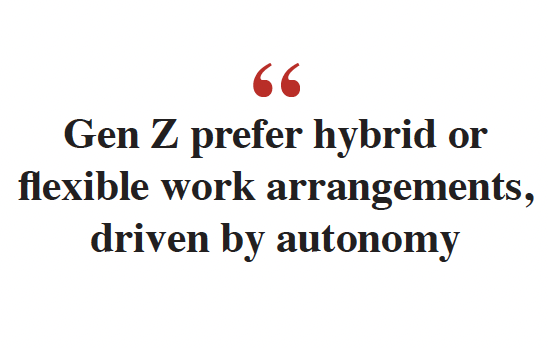
Flexibility is a defining expectation of younger workers. Research shows that Gen Z strongly prefer hybrid or flexible work arrangements, driven by the desire for autonomy and balance. Flexibility is not limited to remote working. It includes flexible working hours, compressed work weeks and autonomy over task management. Young workers increasingly prioritise mental health and well-being alongside career progression. This reflects a broader rejection of continuous performance delivery and an emphasis on sustainable productivity. They expect employers to actively support their well-being. Well-being is not only a moral issue, but also a business imperative, as it directly impacts productivity and retention. They also place a high value on diversity, equity and inclusion where workplaces are inclusive, respectful and representative.
Attracting career-orientated young people into the workforce requires a fundamental shift in how businesses design work and engage employees. The key attraction components to attract young people include a purpose-driven employer identity, continuous learning opportunities, flexible and hybrid working arrangements, competitive and transparent compensation, technology, inclusive and participative workplace cultures and a serious approach to well-being and health. Much of this traces back to the culture of the organisation.