
Driving efficiency in the global compliance landscape Four key lessons from international DRS schemes and how UK wholesalers should adapt
Across the UK, the rollout of a nationwide Deposit Return Scheme (DRS) is edging closer, bringing with it significant operational, financial and logistical implications for wholesalers. For many, the big questions remain of how DRS will affect margins, storage and cashflow.
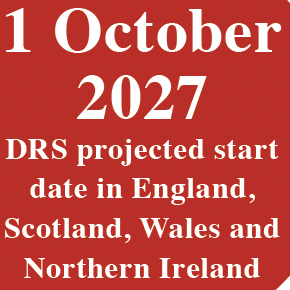
With the UK Deposit Management Organisation’s identity, icon and board now finalised under the name Exchange for Change (see image bottom right of page 21), the UK DRS system is taking shape. The not-for-profit body was established by the industry to design and deliver the DRS across England, Scotland and Northern Ireland, set to go live in October 2027.
Read more: Flat 20p deposit confirmed for DRS
Representing wholesale on the board at Exchange for Change will be former Bestway trading director Richard Booth, who said: “I’m honoured to have been appointed as a board director of UK DMO. With more than 30 billion drinks containers used in the UK every year – many ending up as waste or litter – the DRS is a transformational step towards a circular economy.
“I’m proud to represent the wholesale sector, nominated by both the FWD and SWA, to ensure our industry’s voice is heard in shaping a scheme that is efficient, effective and accessible to all. We’re in the early stages of building the UK DMO, and I look forward to engaging with stakeholders across the supply chain as we move forward.”
While UK planning implementation continues, Booth and wholesalers don’t have to look far for insight. Countries across Europe have been operating successful deposit return systems for years, offering valuable lessons in what works across wholesale models.
In these markets, DRS has reshaped supply chains, driven new conversations around pricing transparency and forced greater collaboration. For wholesalers in particular, international experience highlights three recurring themes: the importance of early systems planning, clear communication across the supply chain and a proactive approach to range and pack strategy.
Case studies
Germany
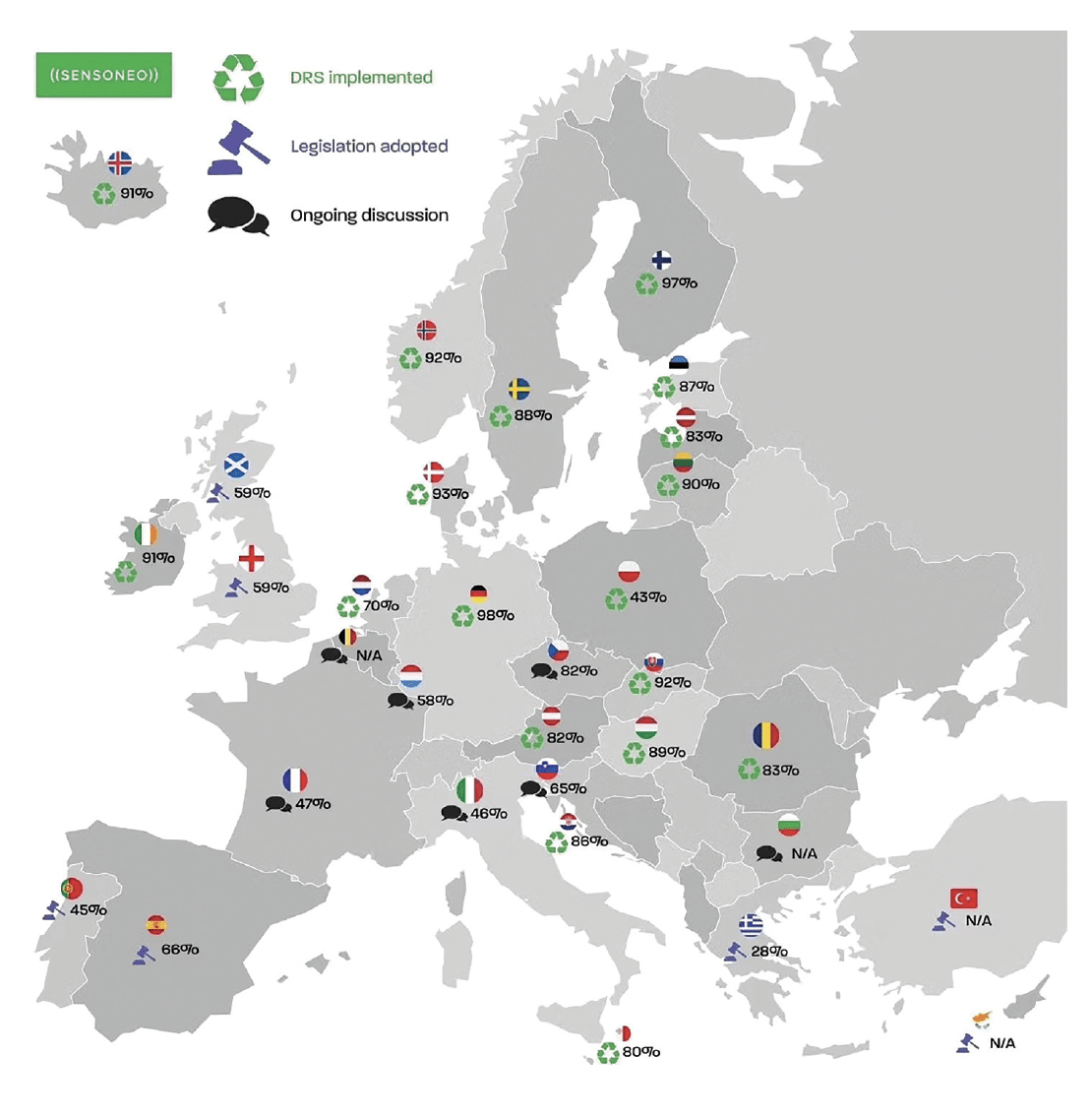
Germany was the first big European country with a population bigger than 30 million to adopt a deposit refund scheme back in 2003, and it took inspiration from systems in Nordic countries. Germany’s DRS is reaching a very high collection rate and is including a collection of glass, metal and plastic – and the deposit (pfand) for PET bottles is €0.25, which is higher than for glass bottles (€0.08 and €0.15).
Lessons for UK wholesalers
• Get your systems ready early as deposits must be clearly separated from product pricing.
• Plan for extra storage because returned empties take up more space than expected.
• Keep invoicing simple as clarity prevents disputes with retail customers.
Lithuania
The Deposit Return System in Lithuania was launched in 2016, and it is considered one of the most modern in the world. During its first year of implementation, the collection rate of drinks containers reached 70% and continued to improve by 20% during the second year to reach a 90% collection rate in 2017. The latest collection rate reached 92% according to UNESDA.
Lessons for UK wholesalers
• Brief customers early to avoid confusion at launch which creates unnecessary pressure.
• Review your range by simplifying SKUs to make DRS easier to manage.
• Coordinate with suppliers makes sure compliant labelling avoids costly delays.
Romania
Romania’s Deposit Return Scheme is the most extensive centralised Deposit Return System in the world. The country stands out in Europe for its high number of traders relative to its population. If all beverage packaging sellers were integrated into the system, Romania would boast the highest density of collection points in Europe – one for every 220 inhabitants, far surpassing the 1,000- 3,000 inhabitants per point in other countries with established deposit return schemes.
Lessons for UK wholesalers
• Expect early disruption, so build flexibility into deliveries and collections.
• Watch for fraud risks and implement strong checking processes from day one.
• Communicate clearly on pricing as transparency reduces retailer friction.
Norway
The DRS in Norway was launched in 1996 following 10 years of discussion, development and testing. PET bottles for beverages and a small amount of HDPE and aluminium cans can be returned at one of the 3,500 reverse vending machines.
Ninety-three per cent of the total drinks containers are collected via this stream and 7% are collected manually at one of the 11,500 collection points registered in the system.
Lessons for UK wholesalers
• Protect cashflow as deposits move through your business quickly.
• Work closely with the scheme operator because smooth reporting means faster repayments.
• Support your customers as wholesalers that explain DRS well build loyalty.
Information provided by Sensoneo, a technology company that provides IT solutions for Deposit Return Schemes and operates various systems across Europe