
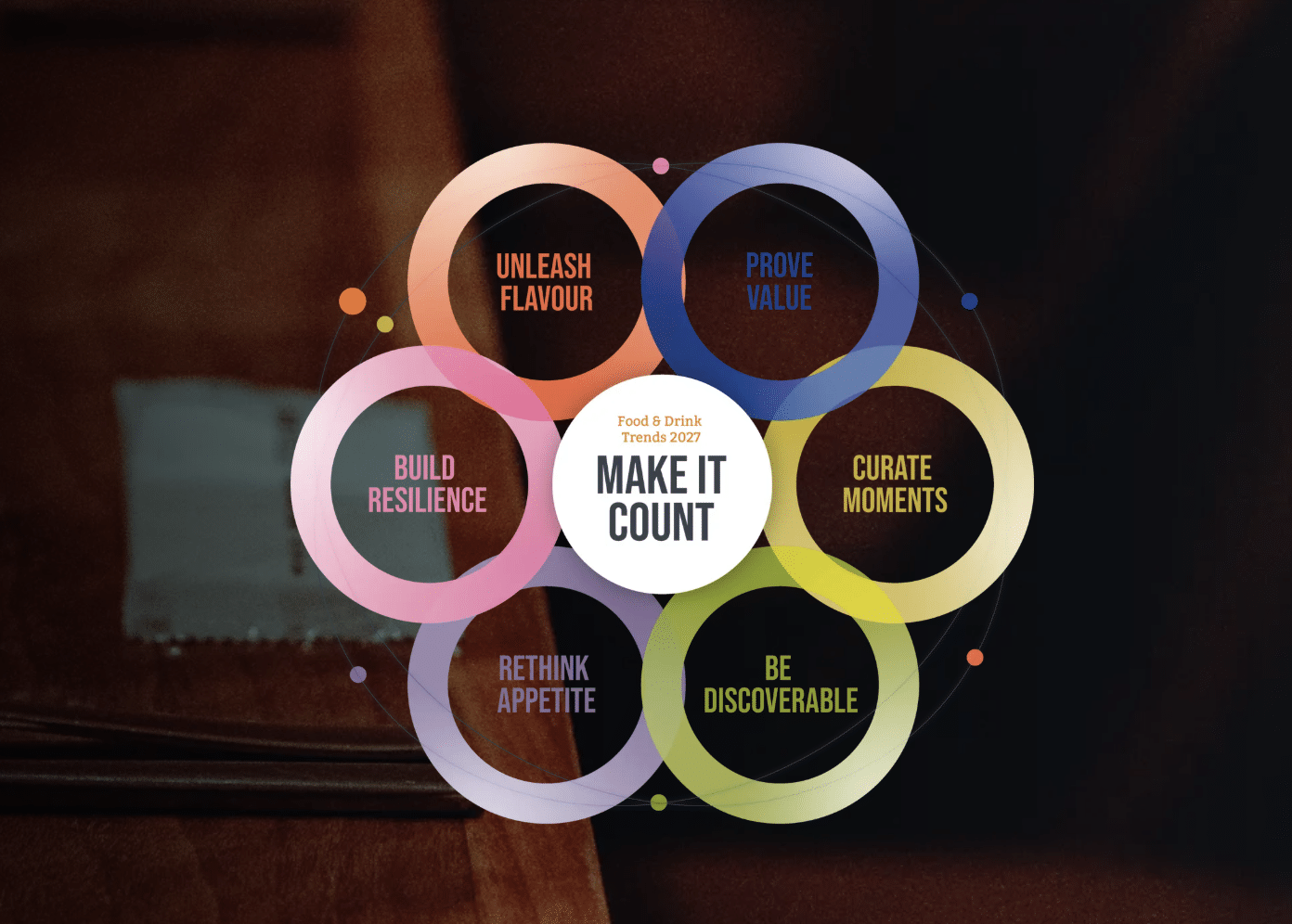
Creed Foodservice has unveiled its 2027 Food and Drink Trends Report, identifying six key trends set to shape hospitality over the coming year.
Under the overarching theme ‘Make It Count’, the report explores how operators can respond to changing consumer expectations, as diners become increasingly selective about when, where and why they eat out.
Gabrielle Evans, insights manager at Creed Foodservice, comments: “In 2026, we encouraged operators to ‘Accept the Challenge’, recognising the need to adapt and innovate in an increasingly demanding market. Those challenges haven’t disappeared, but consumer expectations continue to evolve.
“We’re seeing a market where fewer people are eating out, but those who do are becoming more selective about where they spend and what they expect in return. The six trends we’ve identified for 2027 build on those from last year, reflecting how priorities around value are shifting.
1. Prove Value – Quality, experience and justified spend
As food inflation is expected to rise again in 2027, operators must demonstrate value through visible quality, smarter menus and experiences customers cannot easily recreate at home. For pubs and restaurants, this means selling the whole experience, from service and atmosphere to premium ingredients and provenance. Meanwhile, flexible portion sizes, clever use of ingredients across menus and quality-led meal deals can help operators appeal to different budgets without relying solely on discounts.
2. Curate Moments – Community, connection and memorable experiences
The ‘Experience Economy’ is gaining momentum, with almost half of UK adults (27 million) seeking experiences over material things, particularly among 25-34-year-olds[3].
With emotion, social connection and the occasion itself influencing where people choose to eat and what they order, the opportunity is to design occasions rather than simply sell meals. From themed dining events and supper clubs to sharing menus and community activities, the focus is on creating memorable reasons to visit.
Changing dining habits are also opening up opportunities across different dayparts. While lunch remains the largest opportunity, breakfast and brunch continue to gain share. For 2027, operators should consider creating a calendar of moments, from sporting and cultural events to seasonal celebrations, giving customers reasons to return throughout the year.
3. Be Discoverable – AI, personalisation and smarter technology
Technology is transforming how consumers discover, choose and interact with hospitality venues. With 45% using AI to research venue ratings and reviews, and 43% using it to compare food and drink prices[4], digital discoverability is increasingly important. But consumers don’t necessarily want more technology; they want easier discovery, less friction and more relevant experiences. For operators, this means ensuring venues can be found and recommended through AI-powered searches and using customer data to create targeted offers during quieter trading periods. AI can also help streamline tasks such as staff rotas and stock management, freeing teams to focus on the customer experience.
Read more: Brind to retire from Kitwave as Creed integration leads to two depot closures
4. Rethink Appetite – Smaller portions, greater choice and functional food
Health-conscious eating is reshaping consumer appetites, with 68% of UK consumers trying to eat healthily all or most of the time[5], while almost 27% of the population have used, currently use or are actively considering GLP-1 weight-loss medications[6]. But consumers aren’t looking to sacrifice flavour or indulgence; they want food that suits their individual appetites and lifestyles.
For operators, this means moving beyond traditional portion sizes and menu formats, offering smaller versions of popular dishes, protein and fibre rich options, premium mini desserts and functional drinks. Operators can also create meal combinations around different lifestyles and occasions, such as ‘Power Breakfast’, ‘Focus Lunch’ or ‘Post-Gym Pick-Me-Up’. The opportunity is to provide greater choice without compromising on taste or experience.
5. Build Resilience – Provenance, waste reduction and local sourcing
Following the scorching summer temperatures of 2026, climate resilience is becoming increasingly important for foodservice operators. With extreme weather putting pressure on food production, supply chains and ingredient availability, the focus for 2027 is shifting from sustainability alone to building more resilient businesses. With 36% of consumers willing to pay more for provenance[7], operators can champion seasonal and locally sourced ingredients, introduce greater flexibility into menus, reduce food waste and make smarter use of ingredients. The challenge is to balance environmental responsibility with commercial resilience, without compromising on quality or customer experience.
6. Unleash Flavour – Regional discovery, nostalgia and bold combinations
Flavour remains a powerful driver of food innovation, with 74% of consumers looking for new flavours when eating out[8], while nostalgic favourites are enjoying a resurgence. For 2027, the focus is shifting from introducing unfamiliar ingredients to layering flavours and creating contrast, whether that’s sweet meeting spicy, fermented meeting fresh or crunchy meeting creamy. Expect familiar dishes with global twists, alongside greater use of umami-rich ingredients such as miso, black garlic and fermented sauces to build depth. Operators can reinvent popular dishes with a hero sauce or ingredient, experiment with limited-edition flavour combinations and use toppings and condiments to create customisation opportunities.
Rob Owen, Executive Business Development Chef at Creed Foodservice, said: “The challenge for chefs in 2027 is to deliver more excitement on the plate, without adding unnecessary cost or complexity in the kitchen. Diners still want to be surprised, but they also want to feel they’re getting something they couldn’t easily recreate at home.
“For me, some of the biggest opportunities come from taking dishes we know customers love and giving them a fresh lease of life. A brilliant sauce, an unexpected flavour combination or a clever contrast in textures can turn a familiar favourite into something worth going out for. It’s about being creative with what you’ve got, making every ingredient work harder and giving customers a reason to come back.”