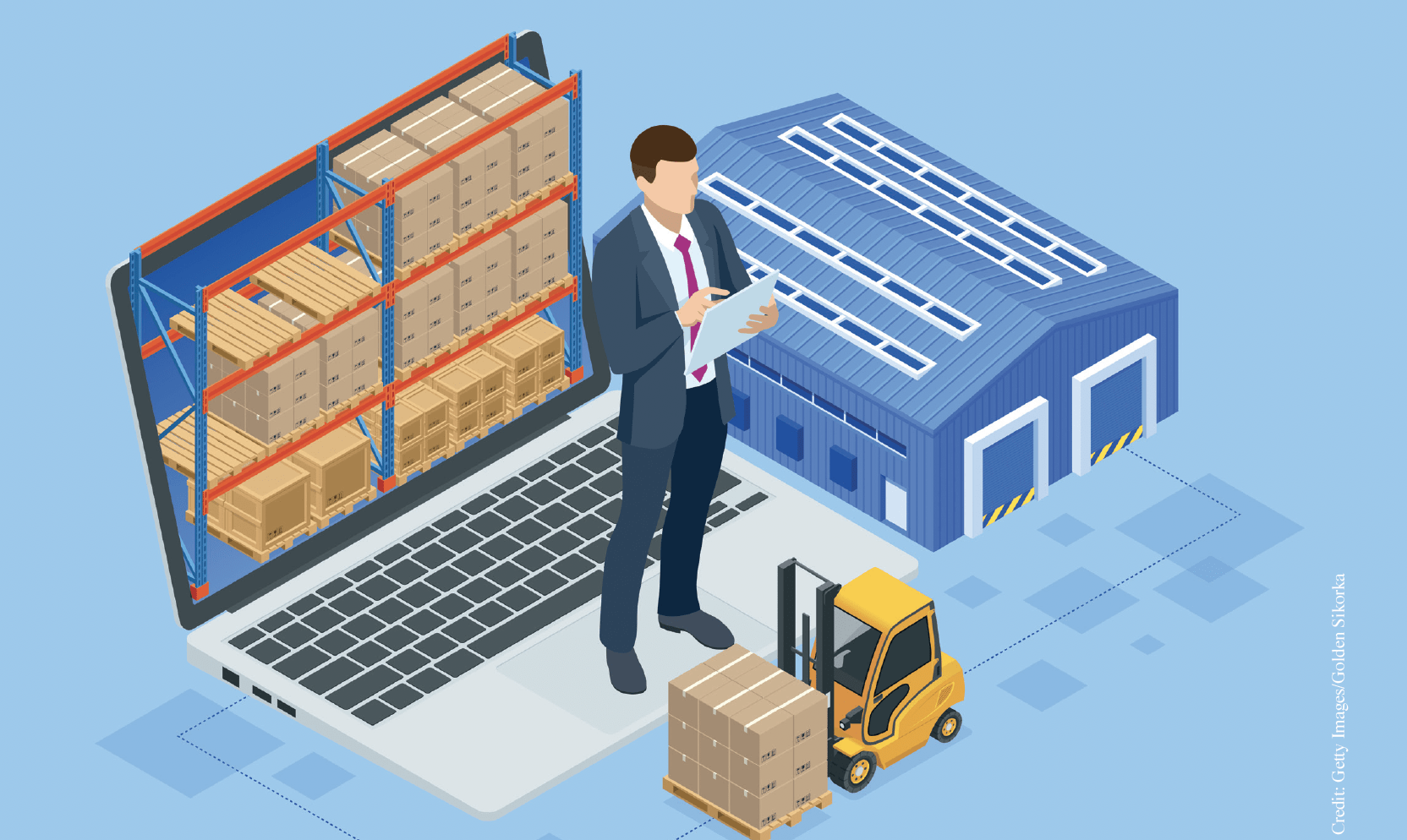
Why e-commerce capability is important, but useless without an excellent fulfilment operation
You have very little chance of succeeding in buying, selling or trading without an e-commerce solution. Some time ago, I was working for a mail-order firm retailing fresh flowers and garden plants by post. Ads were placed in national newspapers to drive sales and build the databases. Customer information was stored on spreadsheets and segregated into various types based on response behaviour, transaction values and spend frequency.
We knew which consumers to mail to and the best propositions to offer. Order receipts and fulfilment projections were all paper-based – clunky, but it worked. Delivery to customers would be days from order, and in the case of plants, many weeks. This made for a highly lucrative business model with credit card payment upfront – many weeks ahead of delivery. Fulfilment had to be on point. If not, the amount of rework and refunding could be crippling. In 1999, we decided to trial online ordering – in the pre-broadband, dial-up age.
Expectations were low. Within a year of electronic retailing, sales had grown to over 10% participation – and with the added advantage of a far lower cost to serve as it bypassed sales agents. We launched e-sales incentives to encourage web ordering, and it drove participation far higher than our projections. The course was set.
Broadband changed everything. It was to e-commerce what paved highways were to logistics – not just a speed upgrade, but an enabler of entirely new formats, categories and customer behaviours. It allowed richer media, constant connectivity and faster transactions, which together moved online shopping from a functional novelty into a truly immersive and scalable retail channel. And in 2007, the launch of the Apple iPhone opened the way for e-commerce on the move and the surge of apps.
E-commerce has become all pervasive, and its place in our social fabric stitched in tightly. Looking back over the past 25 years, there is a clear identifiable direction of travel. The initial platform formation. Then the dot-com bubble weeding out the weak players. Payment methods, security and trust through to scale and logistics.
The arrival of mobile ubiquity through to omnichannel integration. The pandemic shock, which accelerated the use of e-commerce and e-services, and then on to intelligence and automation. Each milestone has layered-on capabilities: faster delivery, better discovery and simpler payments, which together form today’s complex e-commerce ecosystem.
We are now long past discussions about how to make website and app experiences more effective and frictionless. This is taken as a given by customers – and why I fail to understand wholesalers’ obsession with not displaying the price of goods online unless the purchaser logs in. It is akin to opening a store, but displaying the goods behind a barbed-wire fence and restricting entry through a turnstile. Of course, I understand the arguments for keeping prices to members only – notably to conceal the offering from competitors.
It may have been relevant years ago, but now all business customers are highly web and app savvy. They know the prices of most goods across all the operators – and besides, it is not just wholesalers they buy from. Their purchasing is spread across food retailers, online specialists, importers, van sales and online marketplaces. They are not simply comparing price. Range, convenience, quality, reliability and speed are other factors, and it is unlikely that price is number one. Wholesalers should be more confident and remove the restrictions.
Fulfilment
Delivery and fulfilment capability is a key differentiator. Whenever I do research with retailers and hospitality operators, the word ‘reliability’ comes up regularly. Many see this as more important than shaving pennies off the price. For years, the industry viewed delivered wholesale as separate from cash and carry. Today, customers require a more blended service, with cash and carries taking on delivery. It is factored into the service package and charged out accordingly.
We have witnessed the same developments in grocery retail, and there is no getting away from the erosion of profitability as a result. Delivery absolutely must be managed professionally and executed impeccably. There are some learnings from Amazon on this one. Few companies in modern business history have reshaped consumer expectations as profoundly as Amazon.
While much has been written about its website, recommendation algorithms and pricing, Amazon’s real competitive advantage is its fulfilment model. This system is a finely tuned combination of physical infrastructure, advanced technology and strategic partnerships. It is not just an operational backbone; it is a strategic weapon that underpins Amazon’s market dominance.
Amazon’s fulfilment network is an evolving web of fulfilment centres (FCs), sortation centres, delivery stations and Prime Now hubs. The placement of these facilities is not random. It is driven by predictive analytics that determine where demand will occur and how inventory should be pre-positioned. The fulfilment model is more than warehouses and delivery trucks; it is a complex, adaptive system that combines scale, technology, data and vertical integration.
The genius lies in how each component reinforces the others: predictive inventory placement makes speed possible, robotics makes scale economical, predictive modelling increases product availability and last-mile control ensures promises are kept. Crucially, fulfilment is not just an operational cost for Amazon; it is a customer acquisition and retention tool, a platform for marketplace monetisation and a defensive wall against competition.
That is why – more than two decades after its founding – Amazon still sets the standard in e-commerce, and why its fulfilment model remains one of the most brilliant strategic infrastructures in modern business. This is a signpost for wholesalers: focus on fulfilment excellence will grow sales and insulate the business from competitive impacts and market shocks.
The future of e-commerce
Looking forward, it is impossible to predict the trajectory of e-commerce without taking AI into account. The advances are both exhilarating and scary in equal measure. This is well illustrated by the arrival of Google’s AI mode. As reported in The Sunday Times, Google has effectively disrupted itself. Google’s new AI version of its search tool handles queries that would previously have taken multiple searches.
In short, it invites you to speak your query and will scan thousands of web pages in seconds to come back to you with an answer. I recently tested this concept using b2b Store’s ProConnect sales agent. Posing as a pub owner needing advice for a Vietnamese menu, I was able to discuss course options, portion control and must-have choice inclusions. I did the same again for a Sikh wedding. Link this to a back-end masterfile, and there’s your e-commerce solution – all done.
Advanced AI personalisation will tailor every customer’s experience, curating homepages, emails, search results and product suggestions based on real-time behaviour, location and social data. This approach is proven to significantly boost conversion rates and ROI. Visual search allows shoppers to find products using images by simply uploading a photo to locate similar items. Voice commerce is also rising, letting people complete orders using natural speech via voice assistants.
AI models are already creating photorealistic product images and descriptions from text or brand data, reducing reliance on human design workflows and enhancing catalogue richness.
Virtual replicas of products, supply chains or stores will allow businesses to simulate and refine strategies before physical implementation, slashing development time and improving customer outcomes.
AI will reimagine online shopping, making it smarter, faster and more personalised than ever before. AI agents will proactively handle shopping tasks, immersive search tools will meet shoppers where they are and back-end systems will optimise while respecting ethics and privacy.
You have very little chance of succeeding in buying, selling or trading without an e-commerce solution. You have even less chance of success in sustaining a wholesale business without linking to a top-drawer fulfilment operation.